
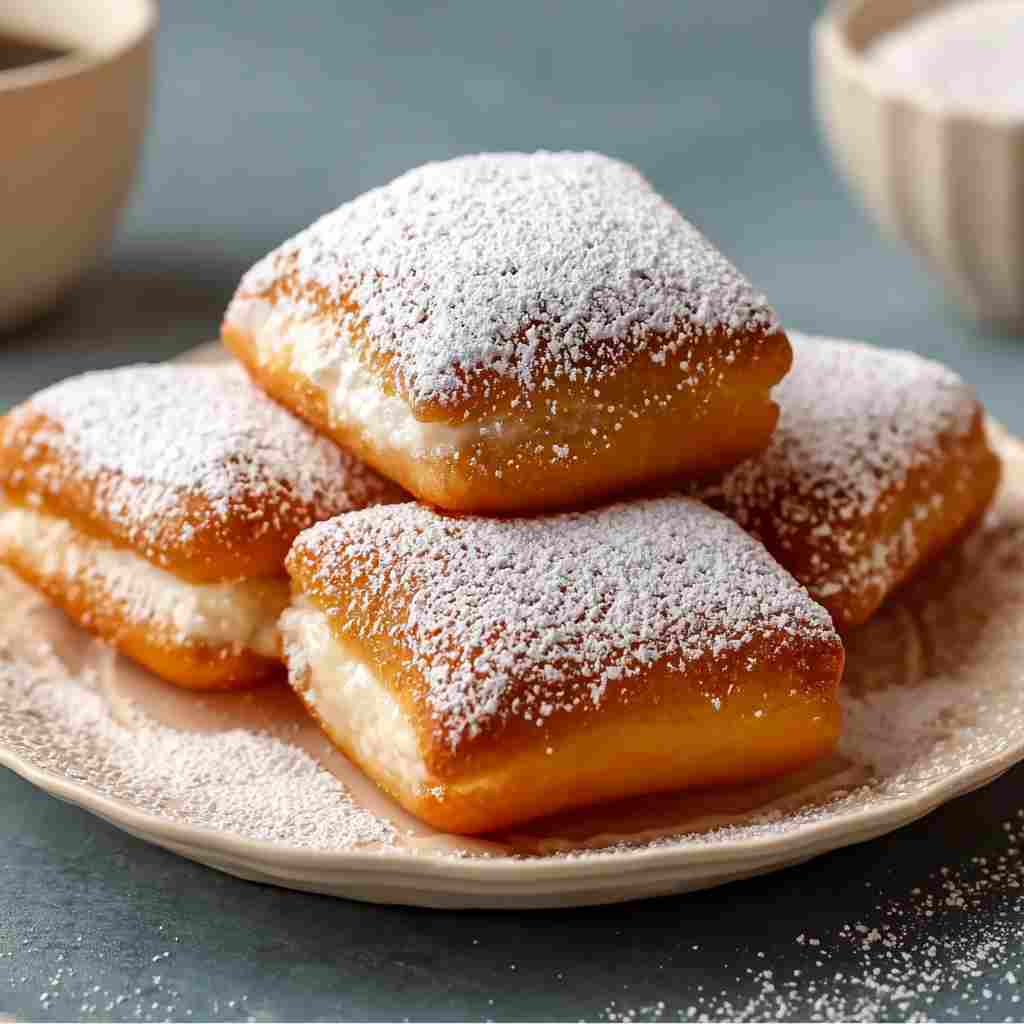
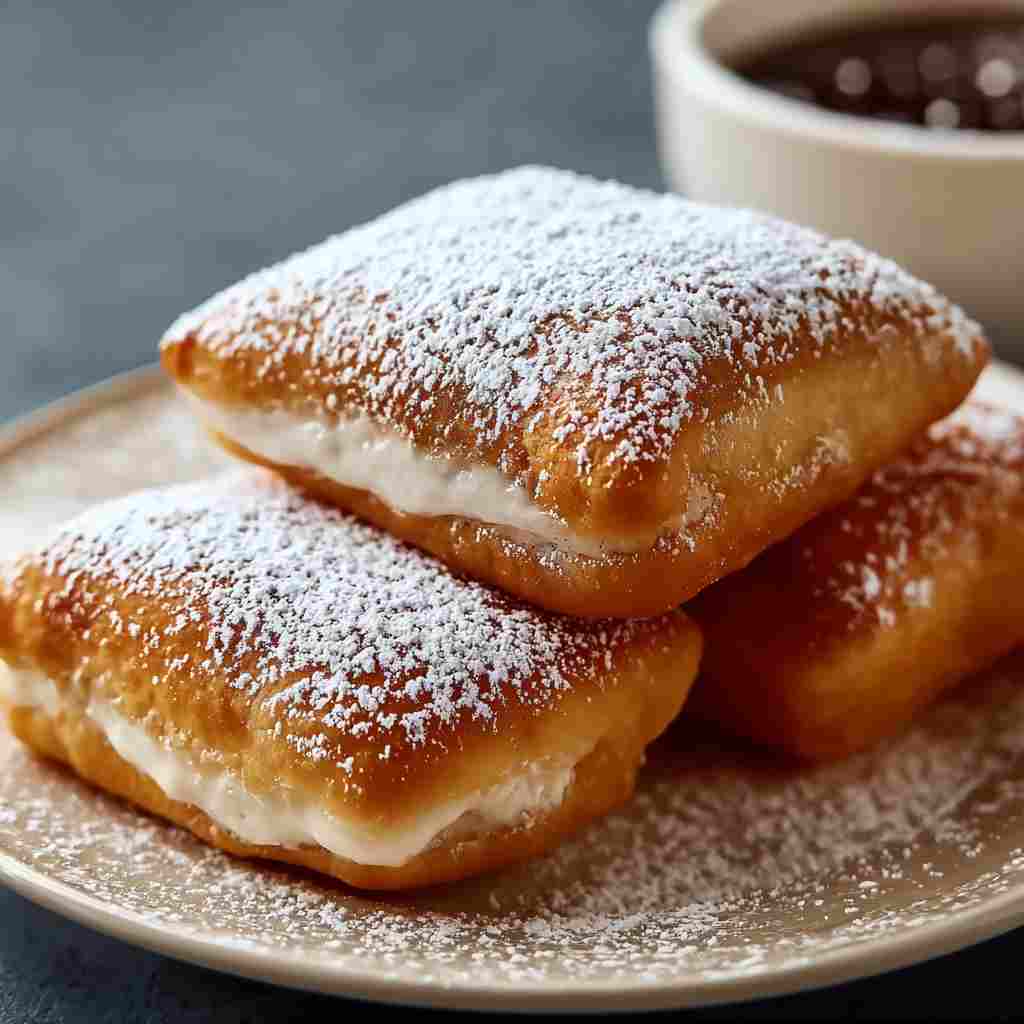
This Vanilla French Beignets Recipe produces soft, pillowy, and vanilla-scented donuts that are fried until golden brown and finished with a heavy dusting of powdered sugar. Bringing the iconic taste of New Orleans to your home kitchen is easier than you think with this straightforward, step-by-step guide. You will love how these light and airy treats pair perfectly with a hot cup of coffee for an authentic French Quarter experience.
Table of Contents
Why You Will Love This Recipe
You will love this Vanilla French Beignets Recipe because it creates a restaurant-quality dessert with simple pantry staples. The dough is enriched with milk and butter, ensuring a tender crumb, while the hint of vanilla adds a sophisticated depth of flavor that sets these apart from standard donuts. Additionally, the dough is incredibly versatile; you can prepare it in advance and let it slow-rise in the refrigerator, making it the perfect choice for a stress-free weekend breakfast or a special brunch gathering.
Ingredients
- 3/4 cup warm water (100-110°F)
- 1/2 cup granulated sugar
- 2 1/4 teaspoons active dry yeast (one 0.25-oz packet)
- 1 large egg, room temperature
- 1/2 cup whole milk or evaporated milk, room temperature
- 2 teaspoons real vanilla extract
- 3 3/4 to 4 cups all-purpose flour, divided
- 1 teaspoon salt
- 3 tablespoons unsalted butter, room temperature
- Vegetable oil or peanut oil for deep frying
- 1/2 cup powdered sugar for dusting
Step-by-Step Instructions
- Activate the Yeast: Add the warm water, yeast, and half of the granulated sugar to the bowl of a stand mixer. Let it sit for about 5 minutes until a thick, foamy layer develops on the surface.
- Combine Wet Ingredients: Once the yeast is bubbly, whisk in the milk, vanilla, the remaining granulated sugar, and the egg until well combined.
- Add Initial Flour: Whisk in 1 3/4 cups of the all-purpose flour until the mixture is smooth and lump-free.
- Knead the Dough: Attach the dough hook and add the remaining flour and salt. Mix on medium speed. Add the softened butter one tablespoon at a time. Continue mixing for about 4 minutes until the dough is smooth and starts to pull away from the sides, though it will remain sticky.
- First Rise: Transfer the dough to a lightly oiled bowl. Cover it and place it in a warm, draft-free spot to rise until it has doubled in size, which usually takes about 2 hours.
- Shape the Beignets: Turn the risen dough onto a well-floured surface. Roll it out into a rectangle approximately 1/2-inch thick. Use a pizza cutter to slice the dough into 2-inch or 2 1/2-inch squares.
- Fry to Perfection: Heat 3 inches of oil in a large pot until it reaches 360°F on a candy thermometer. Fry the beignets in batches of 3 or 4. Once the bottom is puffed and golden, flip them over to brown the other side.
- Drain and Dust: Remove the beignets with a slotted spoon and place them on a paper-towel-lined wire rack. While still warm, dust them generously with powdered sugar and serve immediately.
Expert Tips / Pro Tips
To achieve the best results with your Vanilla French Beignets Recipe, always use a candy thermometer. Maintaining a consistent oil temperature of 360°F is essential; if the oil is too cool, the beignets will soak up grease and become heavy, but if it is too hot, they will burn on the outside while remaining raw in the middle. Another pro tip is to use a pizza wheel for cutting the dough, as it glides through the soft dough much more easily than a standard knife. Finally, do not be afraid to use plenty of flour on your work surface, as this enriched dough is naturally quite sticky.
Variations & Substitutions
While whole milk provides a wonderful richness, you can substitute it with evaporated milk for an even deeper flavor, which is a common practice in many traditional New Orleans kitchens. For the frying oil, vegetable oil is the standard, but peanut oil is an excellent alternative because it has a high smoke point and a neutral flavor. If you prefer a different aromatic profile, you can swap the vanilla extract for almond extract or add a pinch of nutmeg to the dry flour mixture for a warm, spiced undertone.
Serving Suggestions
The most traditional way to serve these beignets is alongside a steaming cup of Cafe au lait (coffee with chicory and hot milk). For a more indulgent dessert, you can serve them with a side of chocolate ganache or raspberry coulis for dipping. They are also delicious when paired with fresh seasonal berries to cut through the sweetness of the powdered sugar.
Storage, Freezing & Reheating
Beignets are best enjoyed fresh and warm. However, you can store the raw dough in the refrigerator for up to 48 hours before frying. For longer storage, you can freeze the cut, raw dough squares on a baking sheet. Once frozen solid, transfer them to a freezer-safe bag for up to one month. Thaw the dough squares completely before frying. To reheat already fried beignets, place them in a 350°F oven for about 3 to 5 minutes, though they will lose some of their signature airiness.
Nutrition Information
| Nutrient | Amount Per Serving |
|---|---|
| Calories | 144 kcal |
| Carbohydrates | 27g |
| Protein | 3g |
| Total Fat | 2g |
| Saturated Fat | 1g |
| Cholesterol | 14mg |
| Sodium | 124mg |
| Sugar | 8g |
Vanilla French Beignets Recipe
Ingredients
Equipment
Method
- Activate the Yeast: Add the warm water, yeast, and half of the granulated sugar to the bowl of a stand mixer. Let it sit for about 5 minutes until a thick, foamy layer develops on the surface.3/4 cup warm water, 2 1/4 teaspoons active dry yeast, 1/2 cup granulated sugar
- Combine Wet Ingredients: Once the yeast is bubbly, whisk in the milk, vanilla, the remaining granulated sugar, and the egg until well combined.1/2 cup whole milk, 2 teaspoons real vanilla extract, 1/2 cup granulated sugar, 1 large egg
- Add Initial Flour: Whisk in 1 3/4 cups of the all-purpose flour until the mixture is smooth and lump-free.4 cups all-purpose flour
- Knead the Dough: Attach the dough hook and add the remaining flour and salt. Mix on medium speed. Add the softened butter one tablespoon at a time. Continue mixing for about 4 minutes until the dough is smooth and starts to pull away from the sides, though it will remain sticky.4 cups all-purpose flour, 1 teaspoon salt, 3 tablespoons unsalted butter
- First Rise: Transfer the dough to a lightly oiled bowl. Cover it and place it in a warm, draft-free spot to rise until it has doubled in size, which usually takes about 2 hours.
- Shape the Beignets: Turn the risen dough onto a well-floured surface. Roll it out into a rectangle approximately 1/2-inch thick. Use a pizza cutter to slice the dough into 2-inch or 2 1/2-inch squares.
- Fry to Perfection: Heat 3 inches of oil in a large pot until it reaches 360°F on a candy thermometer. Fry the beignets in batches of 3 or 4. Once the bottom is puffed and golden, flip them over to brown the other side.Vegetable oil
- Drain and Dust: Remove the beignets with a slotted spoon and place them on a paper-towel-lined wire rack. While still warm, dust them generously with powdered sugar and serve immediately.1/2 cup powdered sugar
Notes
FAQ
Can I bake these beignets instead of frying them?
This specific dough is developed to puff up and become light when it hits hot oil. While you can bake them, the texture will be more similar to a soft dinner roll than a traditional beignet. For an oven-baked version, it is better to use a recipe specifically formulated for baking.
Why didn’t my dough rise?
The most common reason for dough not rising is the temperature of the water. If the water is hotter than 120°F, it can kill the yeast. Conversely, if the water is too cold, the yeast will not activate. Always aim for a temperature between 100°F and 110°F.
How do I keep the powdered sugar from melting?
To ensure the powdered sugar stays white and fluffy, let the beignets drain on paper towels for just a few seconds to remove excess oil, then dust them immediately. The slight warmth helps the first layer stick, while the subsequent layers provide that iconic snowy look.
Can I use instant yeast instead of active dry yeast?
Yes, you can use instant yeast. If using instant yeast, you do not necessarily need to proof it in water first; you can mix it directly with the dry ingredients. However, the rising time may be slightly shorter.