
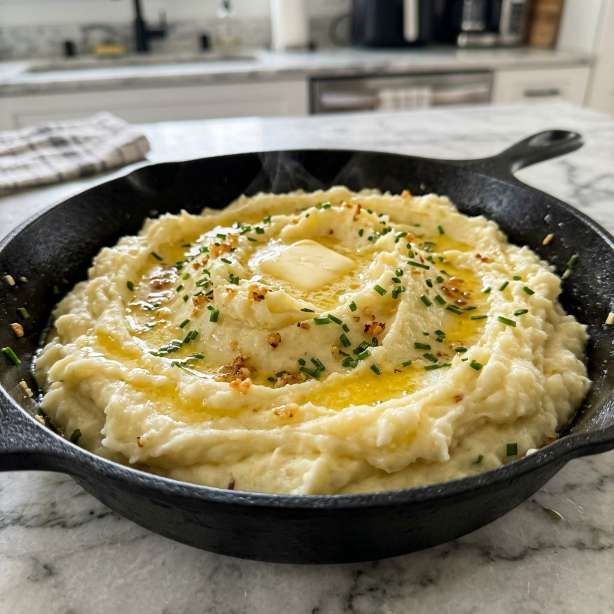
Why You Will Love This Recipe
This recipe is the gold standard for comfort food. You will love it because it produces a perfectly balanced texture that is never gummy or gluey. By following a few simple professional techniques—like starting with cold water and warming your dairy—you can achieve restaurant-quality results right in your own kitchen. Whether you are serving a crowd for the holidays or just need a reliable side dish for roasted chicken, this recipe is designed to be foolproof, flavor-packed, and incredibly satisfying.Ingredients
- 3 pounds Yukon gold or Russet potatoes (about 8 medium Yukon gold or 4 medium Russet)
- 4 tablespoons unsalted butter, at room temperature, cut into 4 pieces
- 1 teaspoon salt, divided, plus more to taste
- 1/4 teaspoon black pepper, or to taste
- 1/2 cup whole milk, warmed, plus more as needed
- 1/2 teaspoon garlic powder (or 2 cloves roasted garlic for extra depth)
Step-by-Step Instructions
- Scrub the potatoes thoroughly under cool water. You may choose to peel them for a classic look or leave the skins on for added texture and nutrients.
- Cut the potatoes into uniform 1-inch pieces to ensure they cook evenly. Place them in a large pot and cover with cold water. Add 1/2 teaspoon of salt to the water.
- Place the pot on the stove and bring to a boil over high heat. Boil the potatoes for 12-15 minutes, or until they are very tender when pierced with a fork but not falling apart.
- Drain the potatoes well using a colander.
- Immediately return the drained potatoes to the empty, still-warm pot. Let them rest for 2-3 minutes; this allows excess moisture to evaporate, which is the secret to fluffy, not watery, mashed potatoes.
- Add the room-temperature butter pieces to the pot. Use a potato masher to break down the potatoes while the butter melts into them.
- Add the remaining 1/2 teaspoon salt, pepper, garlic powder, and half of the warm milk. Stir gently. Gradually add the remaining milk until you reach your desired level of creaminess. Taste and adjust seasonings before serving.
Expert Tips / Pro Tips
To avoid lumpy potatoes, always cook them until they are very tender. Lumps usually occur when the centers of the potato chunks are still firm. However, be careful not to overwork the potatoes; mashing them by hand is superior to using an electric mixer, which can easily turn your potatoes into a gummy, gluey paste. Always start your potatoes in cold water rather than dropping them into boiling water, as this ensures the potato cooks through evenly from the outside in.Variations & Substitutions
If you want to take your potatoes to the next level, try substituting the milk with heavy cream or half-and-half for an ultra-rich, decadent texture. For a tangy twist, swap the milk for buttermilk—just be sure not to heat the buttermilk, as it can curdle. You can also stir in 4 ounces of softened cream cheese or 2 tablespoons of sour cream for added body and flavor. If you love herbs, folding in fresh chives, parsley, or thyme adds a beautiful pop of color and freshness.Serving Suggestions
These garlic mashed potatoes are the perfect companion for savory proteins like crockpot pork chops, baked chicken thighs, or pan-seared salmon. For a “loaded” experience, serve them topped with crispy bacon crumbles, shredded cheddar cheese, and a dollop of sour cream. They are also a mandatory side dish for Thanksgiving and holiday gatherings, pairing beautifully with gravy and roasted vegetables.Storage, Freezing & Reheating
Store leftovers in an airtight container in the refrigerator for up to 3 days. To reheat, place the potatoes in a baking dish, stir in a splash of warm milk to restore moisture, cover with foil, and bake at 350 degrees F until heated through. You can also reheat them in the microwave on high power, stirring occasionally to ensure even heating. If the potatoes seem dry after storage, simply stir in a little extra warm milk or a small pat of butter.Nutrition Information
| Serving Size | 1 serving |
| Calories | 254kcal |
| Carbohydrates | 41g |
| Protein | 5g |
| Fat | 8g |
| Sodium | 411mg |
| Fiber | 5g |
| Sugar | 3g |
FAQ
Which type of potato is best for mashing?
Yukon gold potatoes are the best choice for a rich, buttery, and super creamy texture. Russet potatoes are also excellent if you prefer a lighter, fluffier mashed potato. Many home cooks prefer a 50/50 mix of both to get the best of both worlds.
Should I peel the potatoes?
Peeling is a matter of personal preference. Leaving the skins on Yukon gold potatoes adds a rustic texture and extra nutrients, while peeling Russets creates a smoother, more traditional consistency.
Why did my mashed potatoes turn out gluey?
Gluey mashed potatoes are typically caused by overworking the starch. Avoid using a food processor or an electric hand mixer, and mash by hand using a potato masher just until the lumps are gone.
The Creamiest Garlic Mashed Potatoes from Scratch
The ultimate guide to making restaurant-quality, fluffy, and buttery mashed potatoes at home. This foolproof recipe uses a cold-start method to ensure even cooking and the perfect creamy texture every time.
Ingredients
Method
Instructions
- Scrub the potatoes thoroughly under cool water. Peel if desired, then cut into uniform 1-inch pieces to ensure even cooking.
- Place the potato pieces in a large pot and cover with cold water. Add 1/2 teaspoon of salt to the water.
- Bring the pot to a boil over high heat. Reduce heat slightly and boil for 12-15 minutes, or until the potatoes are very tender when pierced with a fork.
- Drain the potatoes well in a colander, then return them to the hot, empty pot. Let them sit over low heat for 2-3 minutes to allow excess moisture to evaporate.
- Add the softened butter and garlic powder. Use a potato masher to break down the potatoes until smooth.
- Gradually stir in the warm milk, the remaining 1/2 teaspoon of salt, and pepper. Continue mashing or stirring until the desired creamy consistency is reached.
Notes
For the best results, use Yukon Gold potatoes for a naturally buttery flavor. Avoid using an electric mixer, as it can overwork the starch and make the potatoes gummy; hand-mashing is recommended for the fluffiest texture.