
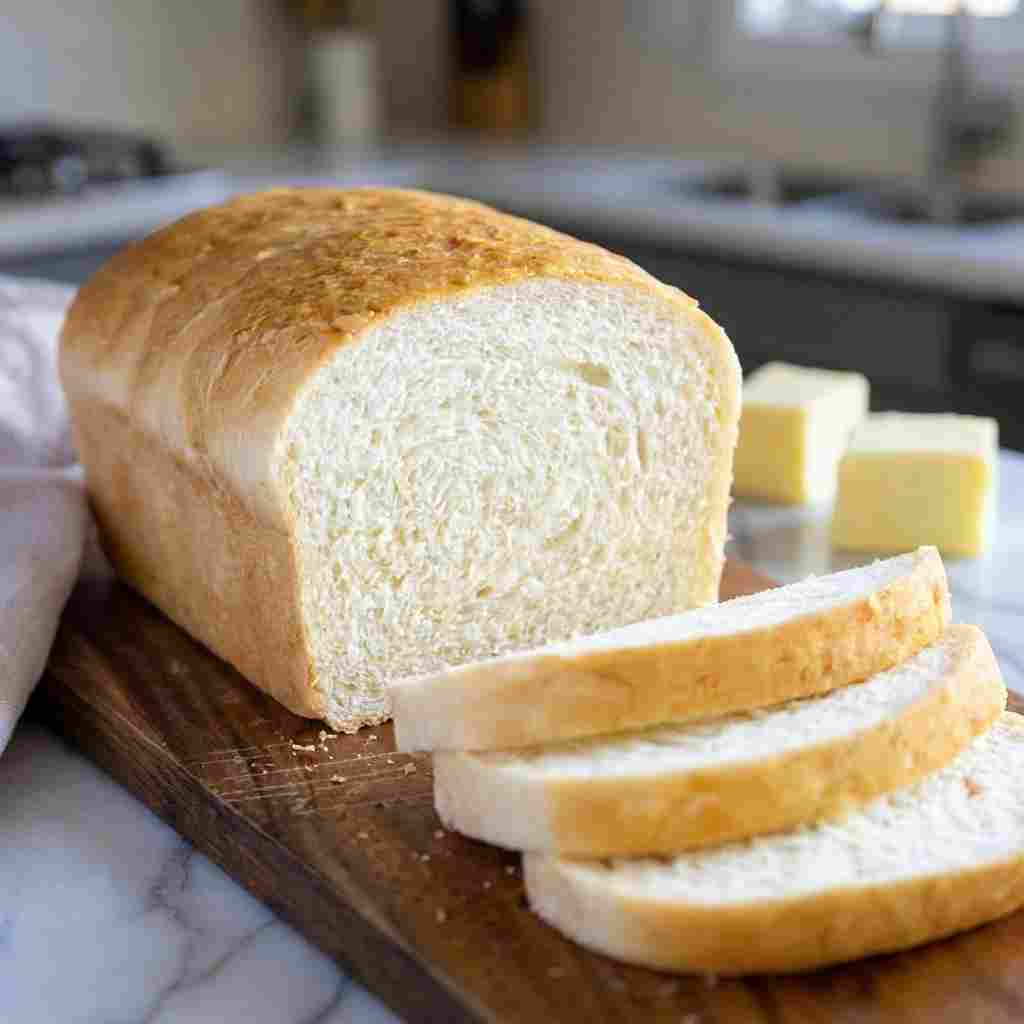
Master the art of homemade bread with this incredibly simple, foolproof recipe. Using just six common pantry staples, you can bake two perfect, fluffy loaves of sandwich-ready white bread that rival any bakery. No milk, eggs, or butter required!
Table of Contents
Why You Will Love This Recipe
This recipe is a game-changer for home bakers of all skill levels. You’ll adore it because it uses only shelf-stable ingredients you likely already have, eliminating last-minute grocery runs. The process is straightforward and forgiving, with detailed tips to guarantee success on your first try. The result is a soft, versatile bread with a perfect crumb that’s ideal for sandwiches, toast, or simply slathered with butter and jam. Plus, it freezes beautifully, allowing you to enjoy homemade bread anytime.
Ingredients (with notes)
- 2 cups warm water (105-115°F / 40-46°C): Crucial for activating the yeast. Too hot will kill it; too cold won’t activate it properly.
- 1 tablespoon active dry yeast: The leavening agent. Ensure it’s not expired for a good rise. See substitutions for Instant Yeast.
- 1/4 cup honey or granulated sugar: Feeds the yeast and adds a subtle sweetness that tenderizes the bread.
- 2 teaspoons salt: Enhances the flavor and strengthens the gluten structure.
- 2 tablespoons vegetable or canola oil: Keeps the bread soft and adds moisture. Melted butter can be substituted for a richer flavor.
- 4 – 5 1/2 cups all-purpose or bread flour (500g-688g): Bread flour yields a slightly chewier loaf with more structure, while all-purpose flour creates a softer crumb. The exact amount varies with humidity and altitude. The goal is a smooth, elastic dough that is just slightly sticky to the touch.
Step-by-Step Instructions
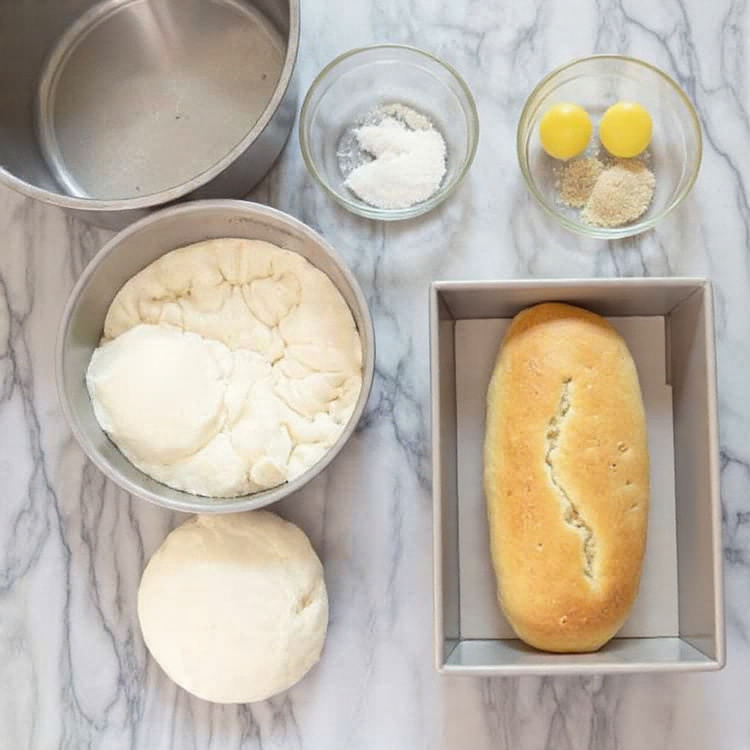
(Imagine photos here for each step: 1) foamy yeast mixture, 2) dough pulling away from mixer bowl, 3) smooth, risen dough in bowl, 4) shaped loaves in pans before second rise, 5) golden-brown baked loaves.)
- Proof the Yeast: In the bowl of a stand mixer or a large mixing bowl, combine the warm water, yeast, and a pinch of the sugar/honey. Let it sit for 5-10 minutes until foamy and bubbly. This “proofs” the yeast, confirming it’s active.
- Mix Dough: Add the remaining sugar/honey, salt, oil, and 3 cups of flour to the yeast mixture. Mix until combined. Add another 1 cup of flour and mix again.
- Knead the Dough: With the mixer running on medium (or by hand on a floured surface), add more flour, ½ cup at a time, until the dough pulls away from the sides of the bowl and is smooth and elastic. Knead for 4-5 minutes with a mixer (5-8 minutes by hand). The dough should be only slightly sticky.
- First Rise: Place the dough in a large, greased bowl, turning to coat. Cover with a towel or plastic wrap. Let rise in a warm place until doubled in size, about 1.5 hours.
- Shape the Loaves: Punch down the risen dough to release air bubbles. Divide into two equal pieces. Shape each into a tight log and place into two greased 9×5 inch loaf pans.
- Second Rise: Cover the pans with a greased piece of plastic wrap or a light towel. Let rise again until the dough domes about 1 inch above the rim of the pans, about 45-60 minutes. Preheat your oven to 350°F (175°C).
- Bake: Bake the loaves for 30-33 minutes, until the tops are deep golden brown and the loaves sound hollow when tapped.
- Cool: Remove loaves from pans and place on a wire rack. Brush the tops with butter for a soft crust. Let cool for at least 15 minutes before slicing.
Expert Tips / Pro Tips
- Flour is a Guide: The given cup range is a guide. Focus on the dough’s texture—smooth, elastic, and slightly tacky—not strictly the cup count.
- Fast Rise Trick: For the first rise, place the covered bowl in an oven that has been preheated to 180°F (82°C) and then turned off. Keep the door slightly ajar. The warm environment will speed up the rise significantly.
- Fresh Yeast is Key: Always check the expiration date. Storing yeast in the refrigerator or freezer extends its life.
- Don’t Skip the Cool: Resist the urge to slice the bread hot! Cooling allows the interior structure to set, preventing a gummy texture.
Variations & Substitutions
- Cinnamon Raisin Bread: After the first rise, roll each dough portion into a rectangle. Sprinkle with a mix of 1/4 cup sugar and 2 tsp cinnamon (and 1 cup raisins, if desired). Roll up tightly, seal the edge, and place in the loaf pan seam-side down.
- Whole Wheat: For a 50/50 loaf, substitute half of the all-purpose flour with whole wheat flour. For 100% whole wheat, use a recipe specifically designed for it, as it requires more moisture.
- Instant Yeast: You can substitute active dry yeast with instant yeast. Simply add it directly with the flour in Step 2, skipping the proofing step in Step 1. Rise times may be slightly faster.
- Dairy-Free & Vegan: This recipe is naturally both! Just ensure your sugar is vegan (some white sugar is processed with bone char) or use maple syrup or agave.
Serving Suggestions
This versatile bread is perfect for classic sandwiches and toast. Serve it warm with homemade jam, honey, or Nutella. Use day-old slices for unbeatable French toast, bread pudding, or croutons. It’s also the ideal side for soups, stews, and pastas.
Storage, Freezing & Reheating
- Storage: Once completely cool, store in an airtight bag or container at room temperature for 2-3 days. For longer freshness (up to 5 days), store in the refrigerator.
- Freeze Baked Bread: Wrap cooled loaves tightly in plastic wrap and then aluminum foil, or place in a freezer bag. Freeze for up to 3 months. Thaw at room temperature or overnight in the fridge.
- Freeze Dough: After shaping into loaves (after Step 6), place the pans in the freezer until solid. Then wrap tightly and freeze for up to 3 months. Thaw in the refrigerator overnight, then let complete the second rise at room temperature before baking.
- Reheating: Revive slices in a toaster. Warm a whole loaf by wrapping it in foil and heating at 350°F for 10-15 minutes.
Nutrition Information
Per Serving (1 slice, based on 24 slices per recipe):
- Calories: 202 kcal
- Carbohydrates: 41g
- Protein: 5g
- Fat: 2g
- Saturated Fat: 1g
- Sodium: 196mg
- Fiber: 1g
- Sugar: 3g
Homemade Bread
Ingredients
Equipment
Method
- In a large bowl or stand mixer add the yeast, warm water and a pinch of the sugar or honey. Allow to rest for 5-10 minutes until foaming and bubbly (this proofs the yeast).2 cups warm water, 1 tablespoon active dry yeast, 1/4 cup honey or granulated sugar
- Add the remaining sugar/honey, salt, oil, and 3 cups of the flour. Mix until combined.2 tablespoons vegetable or canola oil, 1/4 cup honey or granulated sugar, 2 teaspoons salt, 4 – 5 1/2 cups all-purpose or bread flour
- Add another 1 cup of flour and mix. With the mixer running, add more flour, ½ cup at a time, until the dough pulls away from the bowl sides and is smooth and elastic, slightly sticky to the touch. Knead for 4-5 minutes with a mixer (5-8 minutes by hand).4 – 5 1/2 cups all-purpose or bread flour
- Place dough in a large greased bowl, turning to coat. Cover and let rise in a warm place until doubled, about 1.5 hours.
- Punch dough down. Divide in two. Shape each into a log and place into two greased 9×5 inch loaf pans.
- Cover pans and let rise again until dough domes 1 inch above pan rims, about 45-60 minutes. Preheat oven to 350°F (175°C).
- Bake for 30-33 minutes until golden brown and loaves sound hollow when tapped. Invert onto a wire rack, brush with butter, and cool for 15+ minutes before slicing.
Notes
FAQ
Can I make this bread by hand without a mixer?
Absolutely! Mix with a wooden spoon until it becomes too difficult, then turn out onto a floured surface and knead by hand for 5-8 minutes until smooth and elastic.
My yeast didn’t foam during proofing. What happened?
Your yeast may be expired, or the water was too hot or too cold. Start over with fresh yeast and water that is just warm to the touch (around 110°F).
Why is my bread dense?
The most common causes are using old/dead yeast, adding too much flour (creating a dry, heavy dough), or not letting the dough rise long enough.
Can I halve this recipe to make just one loaf?
Yes, you can successfully halve all ingredients to make a single loaf. Baking time may be reduced by a few minutes.