
Gordon Ramsay Pickled Onions are the ultimate kitchen staple that transforms any ordinary meal into a restaurant-quality dish. These bright, crisp, and slightly sweet onions offer a punchy acidity that balances rich meats and fresh salads perfectly. By following Gordon’s specific technique, you can avoid the common pitfalls of homemade pickling and achieve professional results every time.
Table of Contents
Why You Will Love This Recipe
You will love this recipe because it uses simple pantry staples to create a professional-grade condiment in just a few minutes of active work. Gordon Ramsay’s method ensures the onions maintain their signature crunch while absorbing a perfectly balanced brine that is sharp but inviting rather than overbearingly acidic. Whether you are a beginner or a seasoned home cook, this reliable technique delivers consistent, vibrant results that level up everything from tacos to gourmet burgers.
Ingredients
- 2 small red onions
- 2 cups white vinegar
- 2 cups water
- 1/3 cup cane sugar
- 2 tablespoons sea salt
- 2 garlic cloves (optional)
- 1 teaspoon mixed peppercorns (optional)
Step-by-Step Instructions
- Peel the red onions and slice them as thinly as possible. Using a mandoline or a very sharp knife is recommended to achieve slices you can almost see through.
- Divide the sliced onions evenly between two or three clean glass jars. If you are using the optional garlic or peppercorns, add them to the jars now.
- In a small saucepan, combine the white vinegar, water, cane sugar, and sea salt.
- Place the saucepan over medium heat and bring it to a gentle simmer. Stir the mixture constantly until the sugar and salt have completely dissolved and the liquid is clear.
- Remove the brine from the heat and allow it to cool slightly. It should be warm to the touch but not scalding hot when it hits the onions.
- Carefully pour the warm brine over the onions in the jars, ensuring every slice is fully submerged in the liquid.
- Leave the jars uncovered and let them sit at room temperature until they have cooled completely.
- Once cooled, seal the jars with their lids and store them in the refrigerator. The onions will be ready to eat in about an hour, but the flavor is best after resting overnight.
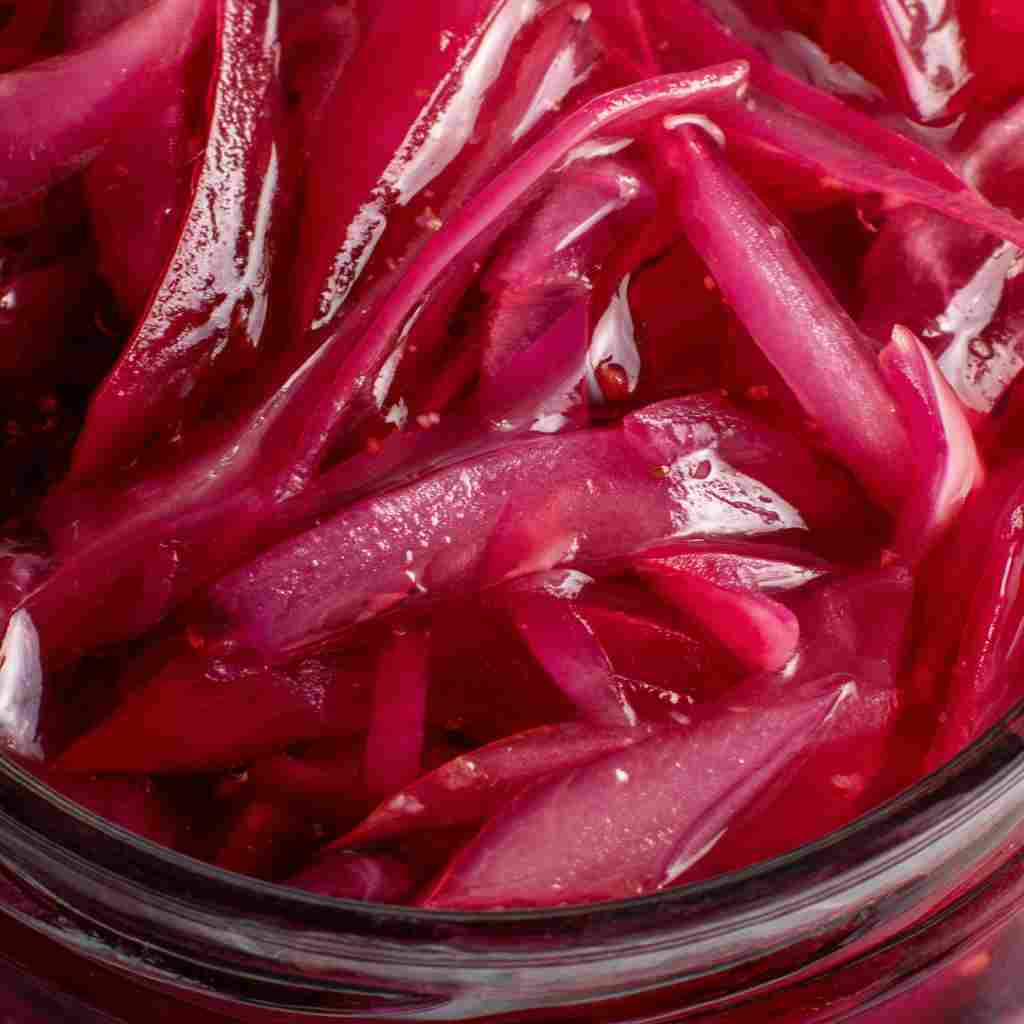
Expert Tips / Pro Tips
Heat Dissolves Everything: One of the biggest mistakes is not fully dissolving the solids. Ensure the vinegar mixture is heated until the sugar and salt are perfectly clear to avoid a gritty texture in your brine.
Uniform Slicing is Critical: To ensure every piece of onion pickles at the same rate, keep your slices uniform. Slicing against the grain helps break down the tough fibers, resulting in a better texture.
The Cooling Period: Never rush the process by capping the jars while the brine is still steaming. Trapped steam creates moisture that can make the onions soggy instead of crisp.
Sterilize Your Jars: If you want your onions to last as long as possible, run your glass jars through a dishwasher cycle or a quick boil before use to ensure they are perfectly clean.
Variations & Substitutions
Adjust the Sweetness: If you prefer a warmer flavor profile, you can substitute the cane sugar with honey, though you may want to use slightly less as honey is sweeter.
Vinegar Swaps: While white vinegar provides a clean sharpness, apple cider vinegar can be used for a fruitier, milder version. For an Asian-inspired twist, try using rice vinegar and adding a sliver of fresh ginger to the jar.
Add Some Heat: For those who enjoy a spicy kick, add half a teaspoon of dried red chili flakes or a few slices of fresh jalapeño to the brine.
Herb Infusions: You can customize the aromatic profile by adding fresh sprigs of thyme, rosemary, or even bay leaves directly into the jars before pouring the brine.
Serving Suggestions
These pickled onions are incredibly versatile and can be used to brighten up a variety of dishes. They are a classic topping for beef burgers and pulled pork sandwiches, providing a necessary acidic contrast to fatty meats. You can also toss them into fresh green salads, use them as a vibrant garnish for avocado toast, or pile them onto fish tacos. For a creative twist, chop them finely and stir them into a homemade tartar sauce or a creamy potato salad.
Storage, Freezing & Reheating
Refrigeration: Always keep your pickled onions chilled. When stored in an airtight jar in the refrigerator, they will easily last for up to two weeks.
Freezing: It is highly recommended that you do not freeze pickled onions. The freezing and thawing process destroys the cellular structure of the onion, leaving them mushy and unappealing.
Reheating: This dish is intended to be served cold or at room temperature. Heating the onions after they have been pickled will cause them to lose their crispness.
Nutrition Information
| Nutrient | Amount Per Serving |
|---|---|
| Calories | 5 kcal |
| Total Fat | 0g |
| Sodium | 150mg |
| Total Carbohydrates | 1.5g |
| Sugars | 1g |
| Protein | 0g |
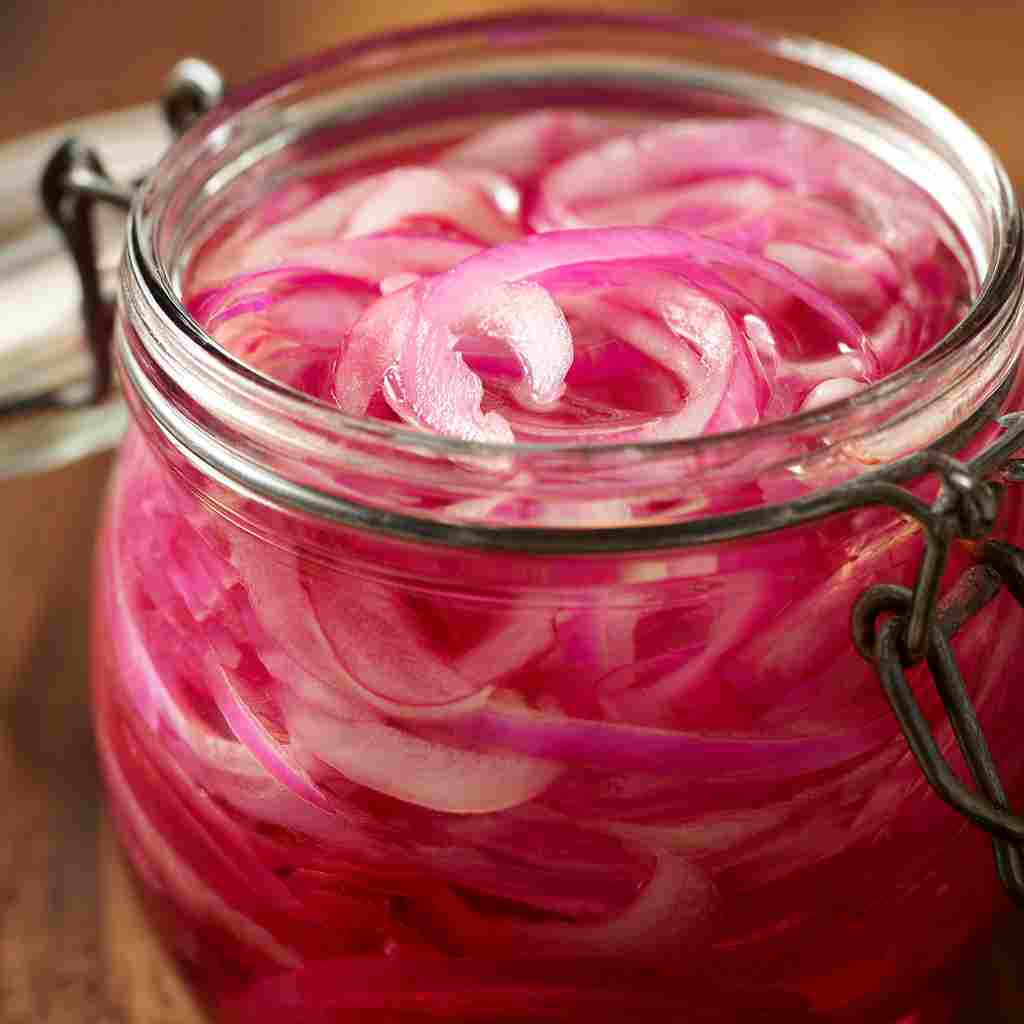
Gordon Ramsay Pickled Onions
Ingredients
Method
- Peel the red onions and slice them as thinly as possible. Using a mandoline or a very sharp knife is recommended to achieve slices you can almost see through.2 small red onions
- Divide the sliced onions evenly between two or three clean glass jars. If you are using the optional garlic or peppercorns, add them to the jars now.2 cloves garlic, 1 teaspoon mixed peppercorns
- In a small saucepan, combine the white vinegar, water, cane sugar, and sea salt.2 cups white vinegar, 2 cups water, 1/3 cup cane sugar, 2 tablespoons sea salt
- Place the saucepan over medium heat and bring it to a gentle simmer. Stir the mixture constantly until the sugar and salt have completely dissolved and the liquid is clear.
- Remove the brine from the heat and allow it to cool slightly. It should be warm to the touch but not scalding hot when it hits the onions.
- Carefully pour the warm brine over the onions in the jars, ensuring every slice is fully submerged in the liquid.
- Leave the jars uncovered and let them sit at room temperature until they have cooled completely.
- Once cooled, seal the jars with their lids and store them in the refrigerator. The onions will be ready to eat in about an hour, but the flavor is best after resting overnight.
Notes
FAQ
Can I use yellow or white onions instead of red?
Yes, you can use other varieties, but red onions are the standard choice because they offer a beautiful pink hue and a naturally milder, sweeter flavor that balances the vinegar perfectly.
Do I have to boil the vinegar?
You do not need a rolling boil, but you must heat the liquid enough so that the sugar and salt dissolve completely. A gentle simmer is usually sufficient.
Why are my pickled onions turning soft?
This usually happens if the brine was too hot when poured over the onions, effectively cooking them, or if the onions were sliced too thick to absorb the brine properly.
Can I reuse the leftover brine?
Technically, you can reuse the brine for one more quick batch, but it will be diluted by the moisture from the first set of onions. For the best flavor and safety, it is always better to make a fresh batch.
How long do I really need to wait before eating them?
While they technically “pickle” in about an hour, the flavors truly meld and the color becomes more vibrant after 24 hours in the fridge.